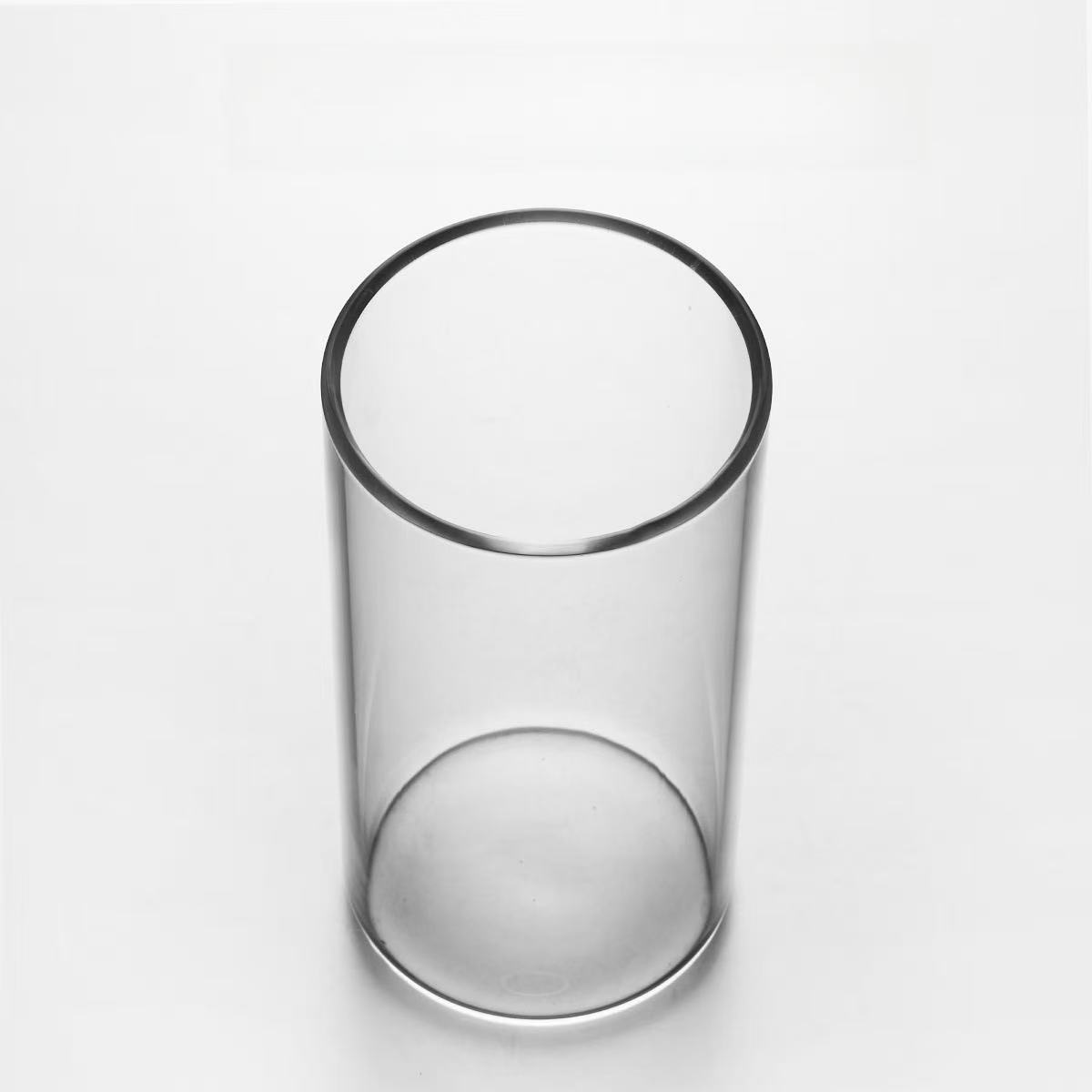
Producing borosilicate glassware presents unique challenges that are often underestimated, especially during early development. Understanding these challenges helps brands and designers make informed decisions from the start.
One common issue is wall thickness variation. Because borosilicate glass is often worked at higher temperatures, maintaining uniform thickness requires experience and precise control. Inconsistent thickness can lead to visual distortion or uneven weight distribution.
Thermal stress is another concern. While borosilicate glass is highly resistant to temperature change, improper annealing can still introduce internal stress. Careful cooling schedules are essential to ensure long-term durability.
Color consistency can also be challenging, particularly with tinted or layered glass. Minor changes in raw material composition or working conditions can affect color tone. Controlled batching and testing are necessary to maintain consistency across production runs.
Finally, scalability is frequently overlooked. A design that works well in small batches may encounter issues when quantities increase. Planning for scalability early — including tooling, workflow, and quality checkpoints — helps avoid costly adjustments later.
Addressing these challenges is not about eliminating complexity, but about understanding it. When production realities are considered early in the design process, borosilicate glassware can achieve both aesthetic quality and reliable performance.